Within Canberra UFO Files
Why Australia's UFO Files Ended Up in Canberra
Canberra became central to Australian UFO history because federal departments and national archives collected reports from across the country.
On this page
- How Canberra became the administrative clearing house
- What the surviving national files contain
- Why archive location can mislead readers about sighting location
Page outline Jump by section
Introduction
Canberra became Australia’s UFO archive centre because it was the seat of the federal departments that received, assessed and eventually preserved reports from across the country. The city was an administrative hub, not necessarily a sighting hotspot. A file created or stored in Canberra might concern a light over Woomera, an encounter near Nowra, an aviation incident over Bass Strait or a report submitted through a regional Royal Australian Air Force base.
This distinction matters because Australian UFO history is often retold as a collection of isolated mysteries. The surviving records show something broader: a national reporting system shaped by Cold War security, aviation safety, military intelligence and ordinary government paperwork. Canberra was where many of those strands converged. Today, the National Archives of Australia gives the public access to a substantial part of that documentary legacy, although the collection is fragmented, uneven and not a complete record of every report ever received.[NAA]naa.gov.auNAAFlying saucers – fact or fiction? | naa.gov.auNAAFlying saucers – fact or fiction? | naa.gov.au
How Canberra became the administrative clearing house
For much of the post-war period, the Royal Australian Air Force was the Commonwealth body most closely associated with UFO reports, officially described in later years as “unusual aerial sightings”. Members of the public, police, pilots and military personnel could submit accounts, often through a local RAAF unit. Standard forms sought basic investigative information such as the time, direction, apparent shape, colour, duration, weather and the witness’s experience.
Reports originating outside the Australian Capital Territory could then move through regional commands to Air Force intelligence and other Commonwealth offices. The purpose was not simply to investigate claims of alien spacecraft. During the Cold War and space race, an unfamiliar object might conceivably have been an aircraft, balloon, missile component, satellite debris or another matter of defence interest. The National Archives describes national security as a reason the government considered it prudent to retain and examine such reports.[NAA]naa.gov.auNAAFlying saucers – fact or fiction? | naa.gov.auNAAFlying saucers – fact or fiction? | naa.gov.au
Canberra’s central role developed alongside the concentration of Commonwealth administration in the national capital. Defence headquarters at Russell became an important point of access to the working UFO files. In 1982, civilian researcher Bill Chalker was allowed to inspect records held by the Directorate of Air Force Intelligence during four visits to the Department of Defence’s Russell Offices. His contemporary inventory recorded 56 files: 47 sighting-report files covering 1955 to 1982, seven files of correspondence with the public and UFO organisations, and two policy files covering 1953 to 1969.[documents.theblackvault.com]documents.theblackvault.comOpen source on theblackvault.com.
That episode illustrates what “archive centre” originally meant in practice. The documents were not yet merely historical exhibits. They were departmental working records, held inside Defence, subject to security classification and controlled access. Chalker recalled that staff temporarily removed the files after discovering that pages had not been formally marked as declassified. The incident suggests bureaucratic caution and inconsistent access processing, rather than proof that the contents contained extraordinary conclusions.[ABC News]abc.net.auABC NewsHow Bill Chalker became one of the first civilians to access the RAAF's UFO files - ABC News…
Canberra was also where policy decisions about the reporting system were made. By the early 1990s, the RAAF judged that unusual aerial sightings were not a worthwhile intelligence priority. The National Archives says the Air Force ceased investigations in 1994, noting its assessment that only about 3 per cent of reports remained unexplained and that these posed little or no security threat. Former RAAF intelligence officer Brett Biddington has described the decision as a question of whether the subject remained part of the Air Force’s core business.[NAA]naa.gov.auNAAFlying saucers – fact or fiction? | naa.gov.auNAAFlying saucers – fact or fiction? | naa.gov.au
Once regular investigation ended, historically valuable records could pass from Defence custody into the national archival system. This shift changed Canberra’s role. It was no longer principally the place where officers decided whether a report warranted action; it became the main public gateway through which researchers could reconstruct how those decisions had been made.
What the surviving national files contain
The collection is not one neatly ordered Australian “X-File”. It consists of record series and individual folders produced by several agencies for different purposes. The RAAF material is the most recognisable, but related papers can also appear in records created by civil aviation, the Department of Supply, weapons-research bodies, intelligence organisations, ministerial offices and other Commonwealth agencies.
The surviving material commonly includes:
- witness questionnaires and handwritten statements;
- correspondence between RAAF bases and headquarters;
- checks against aircraft, meteorological balloons and astronomical objects;
- newspaper cuttings and letters from civilian researchers;
- summaries listing reported sightings and proposed explanations;
- internal memoranda about policy, security relevance and public replies;
- aviation or defence documents in which a UFO report forms only one part of a larger file.
This mixture is important when judging the evidence. The presence of a report in a government file establishes that somebody reported an event and that officials recorded or discussed it. It does not establish that an extraordinary craft existed. The files themselves regularly contain conventional possibilities such as Venus, the Moon, aircraft, balloons and weather effects. Conversely, an official inability to identify a report does not automatically make it strong evidence: many files lack reliable estimates of range, altitude or speed, and some contain little more than correspondence or second-hand summaries.[NAA]naa.gov.auNAAFlying saucers – fact or fiction? | naa.gov.auNAAFlying saucers – fact or fiction? | naa.gov.au
Some records are nevertheless valuable because they preserve testimony and investigative details that might otherwise have disappeared. The National Archives highlights the 1954 Sea Fury incident near Nowra, New South Wales, in which naval pilot James O’Farrell reported lights apparently keeping pace with his aircraft and a ground radar operator recorded unidentified returns. Whatever the ultimate explanation, the archive retains both the pilot’s account and official communications, allowing later readers to distinguish the contemporary evidence from embellished retellings.[NAA]naa.gov.auNAAFlying saucers – fact or fiction? | naa.gov.auNAAFlying saucers – fact or fiction? | naa.gov.au
The same national collection contains records about sightings at weapons-testing locations. A Department of Supply report concerning a moving red light observed in 1960 near the Maralinga area in South Australia survived because it formed part of government records associated with defence research. Its current archival visibility does not imply that the incident occurred in Canberra; it shows how records from strategically important sites eventually entered Commonwealth custody and became accessible through the national system.[NAA]naa.gov.auufo sightings weapons testing site woomeraUFO sightings at weapons testing site, WoomeraThis confidential two-page report details sightings on 15 July 1960 of an unidentified f…
The files can also reveal what officials did not do. Chalker’s 1983 progress report said that Defence scientific intelligence had only a marginal interest in UFOs and generally relied upon Air Force intelligence to conduct initial inquiries. According to correspondence he cited from a former intelligence official, scarce analytical resources would not be committed heavily unless there were grounds to suspect a foreign, rather than extraterrestrial, origin. This supports a restrained reading of Canberra’s archive: the government collected many reports, but it did not operate a continuously staffed scientific programme comparable to the more elaborate mythology sometimes built around the records.[documents.theblackvault.com]documents.theblackvault.comOpen source on theblackvault.com.
Why the collection is incomplete
The survival of many files should not be mistaken for archival completeness. Government records pass through changing filing systems, departmental restructures, retention decisions and transfers between agencies. Duplicate copies may survive where originals do not, while apparently related documents may be catalogued in different series because separate agencies created them.
One notable gap predates the mature Canberra filing system. Chalker reported that early civil aviation files contained copies of RAAF papers that were no longer present in the Air Force collection. He was told that some original Department of Air files may have been destroyed during an administrative move from Melbourne to Canberra in the early 1960s. That account comes from a researcher’s report rather than a comprehensive official audit, but it demonstrates why absence from the surviving Defence series cannot prove that no investigation or document ever existed.[documents.theblackvault.com]documents.theblackvault.comOpen source on theblackvault.com.
Later losses have also attracted attention. In 2011, reports emerged that Defence could locate only a small portion of more recent UFO files sought under freedom-of-information procedures, with other records believed to have been destroyed under ordinary disposal arrangements or otherwise unaccounted for. Contemporary coverage often presented this as the mysterious disappearance of Australia’s “X-Files”, but the available evidence does not establish deliberate suppression. Routine records-management failures, decentralised custody and lawful destruction are less dramatic and at least as plausible.[SBS Australia]sbs.com.au0, the Herald said, asking members of the public to report incidents to police…Read more…
A surviving file may itself be incomplete. Pages can be missing, duplicated, masked because they were not yet within the statutory open-access period, or withheld to protect information covered by exemptions. An archival access mask attached to one digitised Defence file, for example, records that material dating from 1984 to 1989 was temporarily closed because it had not yet entered the open period. Such administrative restrictions are not evidence that the concealed pages concerned extraterrestrial technology; they are normal features of public-record access law.[documents.theblackvault.com]documents.theblackvault.comOpen source on theblackvault.com.
Digitisation adds another limitation. The ABC reported in 2024 that hundreds of files are available online, but this does not mean every relevant item has been scanned or indexed under obvious terms. Researchers may need to search for older administrative language such as “unusual aerial sightings”, “flying objects”, “reports of sightings” or the name of a creating agency rather than relying solely on “UFO”.[ABC News]abc.net.auABC NewsHow Bill Chalker became one of the first civilians to access the RAAF's UFO files - ABC News…
Why archive location can mislead readers
The most common mistake is to treat a Canberra-held record as an ACT case. Archival geography, administrative geography and sighting geography are three different things.
A report could be made in Western Australia, forwarded through an RAAF base, considered by headquarters in Canberra and eventually stored by the National Archives. Its catalogue entry might identify a Commonwealth agency and a Canberra-controlled series, even though no part of the sighting occurred within the ACT. The Canberra connection concerns custody and decision-making, not the object’s alleged location.
Nor are all surviving UFO-related records necessarily held physically in Canberra. The National Archives operates research centres in several cities, and records must ordinarily be viewed at the centre where they are held unless digital copies are available or other arrangements are made. Its research guidance specifically advises users to check both an item’s access status and its physical location in RecordSearch.[NAA]naa.gov.auResearch centres | naa.gov.auIdentify the records you wish to view. Then check their location and access status. Before you can view r…
This matters for state-by-state UFO history. A nationally important file may belong thematically to South Australia, Victoria or Western Australia while still illuminating Canberra’s federal role. The 1960 weapons-range report belongs within South Australian history; the Sea Fury file concerns New South Wales; records surrounding the disappearance of Frederick Valentich concern a Victorian and Bass Strait aviation case. Their presence in Commonwealth archives shows how Canberra collected national information, not that the ACT produced all of Australia’s strongest incidents.
Readers should therefore ask three separate questions of any document:
- Where did the reported event occur?
- Which agency created or handled the record?
- Where is the archival item now held or accessed?
Keeping those questions separate prevents the national capital from appearing to have an artificial concentration of sightings simply because federal paperwork accumulated there.
What Canberra’s archive can and cannot prove
Canberra’s UFO records are strongest as evidence of government process. They show that authorities received reports, devised forms, sought ordinary explanations, communicated across agencies and periodically reviewed whether the activity justified continued expenditure. They also preserve individual cases that remain difficult to reconstruct conclusively.
They are weaker as evidence for sweeping claims. No known archival series demonstrates that the Australian Government confirmed extraterrestrial visitation. The official record instead shows a spectrum ranging from readily identified astronomical or aviation events to reports left unresolved because the information was insufficient. An “unexplained” notation usually means that investigators could not confidently assign a cause from the available evidence; it does not mean every conventional explanation was disproved.
The files also weaken the idea of an all-powerful, perfectly coordinated secrecy system. Their history is untidy. Departments duplicated papers, lost context, moved offices, changed terminology, transferred records unevenly and sometimes destroyed material under records schedules. Even civilian access could depend on persistence and improvised declassification. That bureaucratic disorder can produce genuine gaps, but gaps alone do not establish a cover-up.
Since the RAAF withdrew from routine investigations, Canberra has preserved more history than it has generated new official casework. In 2021, Defence told the ABC that it had no protocol for recording or analysing UFO or unidentified aerial phenomenon reports. The national capital therefore remains central mainly because it houses the institutional memory of Australia’s former system, not because it currently runs an equivalent national investigative programme.[ABC News]abc.net.auABC NewsAustralian Defence Department not looking at UFOs despite landmark report on topic handed to US Congress - ABC News…
The ACT’s distinctive place in Australian UFO history
For the Australian Capital Territory, the archive is at least as important as any individual sighting. Canberra’s significance lies in the way national reports were concentrated, evaluated and later opened to public scrutiny there. The records connect the ACT to virtually every major branch of Australian UFO history: military encounters, aviation cases, weapons-testing sites, civilian witness reports and disputes over official transparency.
That role also requires careful interpretation. Canberra should be described as Australia’s principal UFO administrative and archival centre, not as the location of every event found in its files. The most reliable reading is neither that the records prove extraordinary visitation nor that they are worthless collections of mistakes. They are a large but incomplete documentary dataset showing how Australian authorities responded when citizens and service personnel reported something in the sky that they could not immediately identify.
Amazon book picks
Further Reading
Books and field guides related to Why Australia's UFO Files Ended Up in Canberra. Use these as the next step if you want deeper reading beyond the article.
UFOs and Government: A Historical Inquiry
Governments around the world have had to deal with the UFO phenomenon for a good part of a century. How and why they did so is the subjec...

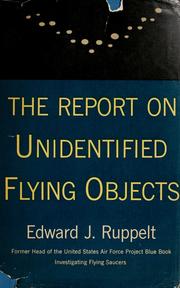
The Report on Unidentified Flying Objects
Book Excerpt: ing can never be positively identified. It might have been a hallucination or it might have been some vehicle from outer sp...
Archives: Principles and Practices
This new and extensively revised second edition offers an international perspective on archives management, providing authoritative guida...
eBay marketplace picks
Marketplace Samples
Live-tested eBay searches with available results related to this page.
Selected fromAustralian UFO poster oneBay.co.uk.


Endnotes
1.
Source: naa.gov.au
Title: NAAFlying saucers – fact or fiction? | naa.gov.au
Link:https://www.naa.gov.au/blog/flying-saucers-fact-or-fiction
2.
Source: documents.theblackvault.com
Link:https://documents.theblackvault.com/documents/ufos/australia/A9755_22_3533575.pdf
3.
Source: naa.gov.au
Link:https://www.naa.gov.au/help-your-research/research-centres
Source snippet
Research centres | naa.gov.auIdentify the records you wish to view. Then check their location and access status. Before you can view r...
4.
Source: space.com
Title: 11892 australian government loses ufo files
Link:https://www.space.com/11892-australian-government-loses-ufo-files.html
5.
Source: abc.net.au
Link:https://www.abc.net.au/news/2024-12-07/accessing-australia-secret-ufo-files/104673082
Source snippet
ABC NewsHow Bill Chalker became one of the first civilians to access the RAAF's UFO files - ABC News...
6.
Source: naa.gov.au
Title: ufo sightings weapons testing site woomera
Link:https://www.naa.gov.au/students-and-teachers/student-research-portal/learning-resource-themes/war/defence-equipment-and-weapons/ufo-sightings-weapons-testing-site-woomera
Source snippet
UFO sightings at weapons testing site, WoomeraThis confidential two-page report details sightings on 15 July 1960 of an unidentified f...
Published: July 1960
7.
Source: abc.net.au
Link:https://www.abc.net.au/news/2021-06-26/australian-defence-dept-says-it-is-not-looking-at-ufos/100246652
Source snippet
ABC NewsAustralian Defence Department not looking at UFOs despite landmark report on topic handed to US Congress - ABC News...
8.
Source: sbs.com.au
Link:https://www.sbs.com.au/news/article/australias-military-loses-its-ufo-x-files/bdnn5c5oz
Source snippet
0, the Herald said, asking members of the public to report incidents to police...Read more...
9.
Source: naa.gov.au
Link:https://www.naa.gov.au/search?page=14&search_api_fulltext=open+access+period
Source snippet
Search | naa.gov.auFlying saucers – fact or fiction? Royal Australian Airforce records documenting UFO sightings reported to the governme...
10.
Source: naa.gov.au
Title: flying saucers capital hill modelling parliament house
Link:https://www.naa.gov.au/blog/flying-saucers-capital-hill-modelling-parliament-house
11.
Source: naa.gov.au
Title: colour australias first deadlock
Link:https://www.naa.gov.au/blog/colour-australias-first-deadlock
12.
Source: naa.gov.au
Link:https://www.naa.gov.au/search?page=18&search_api_fulltext=Digitising+accumulated+physical+records+
13.
Source: naa.gov.au
Link:https://www.naa.gov.au/help-your-research/fact-sheets
14.
Source: naa.gov.au
Title: together well show world telecom expo info
Link:https://www.naa.gov.au/blog/together-well-show-world-telecom-expo-info
15.
Source: naa.gov.au
Link:https://www.naa.gov.au/students-and-teachers/learning-resources/learning-resource-themes/war/world-war-ii/national-security-aliens-tribunal-report-objections-submitted-internee-wolf-klaphake
16.
Source: naa.gov.au
Link:https://www.naa.gov.au/help-your-research/fact-sheets/alien-registration-records-held-perth
17.
Source: naa.gov.au
Link:https://www.naa.gov.au/explore-collection/immigration-and-citizenship/alien-registration-records
18.
Source: naa.gov.au
Link:https://www.naa.gov.au/help-your-research/fact-sheets/world-war-ii-internee-alien-and-pow-records-held-sydney
19.
Source: naa.gov.au
Title: world war i internee alien and pow records held adelaide
Link:https://www.naa.gov.au/help-your-research/fact-sheets/world-war-i-internee-alien-and-pow-records-held-adelaide
20.
Source: naa.gov.au
Title: patent records held canberra
Link:https://www.naa.gov.au/help-your-research/fact-sheets/patent-records-held-canberra
21.
Source: naa.gov.au
Link:https://www.naa.gov.au/information-management/records-authorities/types-records-authorities/general-records-authority-39
22.
Source: naa.gov.au
Title: national archives preservation facility canberra closed following minor fire
Link:https://www.naa.gov.au/about-us/media-and-publications/media-releases/national-archives-preservation-facility-canberra-closed-following-minor-fire
23.
Source: naa.gov.au
Link:https://www.naa.gov.au/sites/default/files/2019-12/agency-ra-2007-00576124.pdf
24.
Source: naa.gov.au
Title: research guide safe haven
Link:https://www.naa.gov.au/sites/default/files/2020-06/research-guide-safe-haven.pdf
25.
Source: naa.gov.au
Link:https://www.naa.gov.au/sites/default/files/2019-12/agency-ra-2010-00663993.pdf
26.
Source: naa.gov.au
Link:https://www.naa.gov.au/sites/default/files/2020-06/research-guide-the-boer-war.pdf
27.
Source: naa.gov.au
Title: research guide gough whitlam
Link:https://www.naa.gov.au/sites/default/files/2020-02/research-guide-gough-whitlam.pdf
28.
Source: naa.gov.au
Link:https://www.naa.gov.au/sites/default/files/2020-08/research-guide-royalty-and-australian-society.pdf
29.
Source: slwa.wa.gov.au
Link:https://slwa.wa.gov.au/stories/slwa-abc-radio/truth-not-out-there
Additional References
30.
Source: youtube.com
Title: 665 // Frederick Valentich
Link:https://www.youtube.com/watch?v=AA_JueUmgqM
Source snippet
This collection provides investigative coverage and historical analysis of official Australian government and RAAF UFO archives, highligh...
31.
Source: youtube.com
Title: Schoolyard [witnesses]({{ ‘witnesses/’ | relative_url }}) in mass UFO sighting demand answers | Australian Story
Link:https://www.youtube.com/watch?v=IhKyQkhOfoM
Source snippet
Secrets of the UFOs | Full Documentary | 7NEWS Spotlight...
32.
Source: youtube.com
Title: Secrets of the UFOs | Full Documentary | 7NEWS Spotlight
Link:https://www.youtube.com/watch?v=sEczN_8Q380
Source snippet
Australia's UFO Secrets Exposed with Ross Coulthart...
33.
Source: linkedin.com
Link:https://www.linkedin.com/pulse/australias-forgotten-uap-record-now-part-disclosure-dr-andrew-btobc
34.
Source: disclosure.org
Link:https://disclosure.org/api/media/Documents/1971-australian-ufo-assessment.pdf
35.
Source: ovniarchive.com
Link:https://ovniarchive.com/doc/9952?lang=en
36.
Source: youtube.com
Title: Australia’s UFO Secrets Exposed with Ross Coulthart
Link:https://www.youtube.com/watch?v=hzoJPerhz-I
Source snippet
Where do UFOs come from? (1967) | RetroFocus...
37.
Source: youtube.com
Link:https://www.youtube.com/watch?v=xuaI9LaR5m4
Source snippet
665 // Frederick Valentich - UFO Mystery?...
38.
Source: youtube.com
Link:https://www.youtube.com/shorts/Rrou1Yl-hao
39.
Source: ufotransparency.com
Title: intl au foia australia notes foia australia naa file numbers notes
Link:https://ufotransparency.com/files/intl-au-foia-australia-notes-foia-australia-naa-file-numbers-notes