Within Official Files
How Melbourne's Strange Lights Were Checked
RAAF investigators compared strange lights near Melbourne with aircraft movements, balloons, weather and celestial objects before leaving a case unresolved.
On this page
- How reports reached RAAF and air traffic authorities
- Aircraft, balloon and astronomical checks around Melbourne
- Why incomplete observations often remained unresolved
Page outline Jump by section
Introduction
During the Cold War, unusual lights reported around Melbourne’s airfields were treated first as an aviation and air-defence problem rather than a mystery. With busy civil airports at Essendon, Moorabbin and later Tullamarine, alongside Royal Australian Air Force (RAAF) bases at Point Cook and Laverton, unidentified aerial reports could not simply be ignored. They had to be checked against known aircraft, balloons, weather conditions and astronomical objects before any conclusion was reached. The result was often less dramatic than popular UFO stories suggest: most reports were explained, while a smaller number remained officially unresolved because the available evidence was too limited to identify the object with confidence.[Internet Archive]archive.orgOpen source on archive.org.
Rather than searching for extraterrestrial spacecraft, the RAAF’s process aimed to answer a practical question: had someone seen an ordinary object, a potential security concern, or something that simply could not be identified from the available information?
How reports reached RAAF and air traffic authorities
Melbourne’s aviation network meant that reports of strange lights could originate from several directions. Airline crews, military pilots, air traffic controllers, police officers and members of the public all contributed observations.
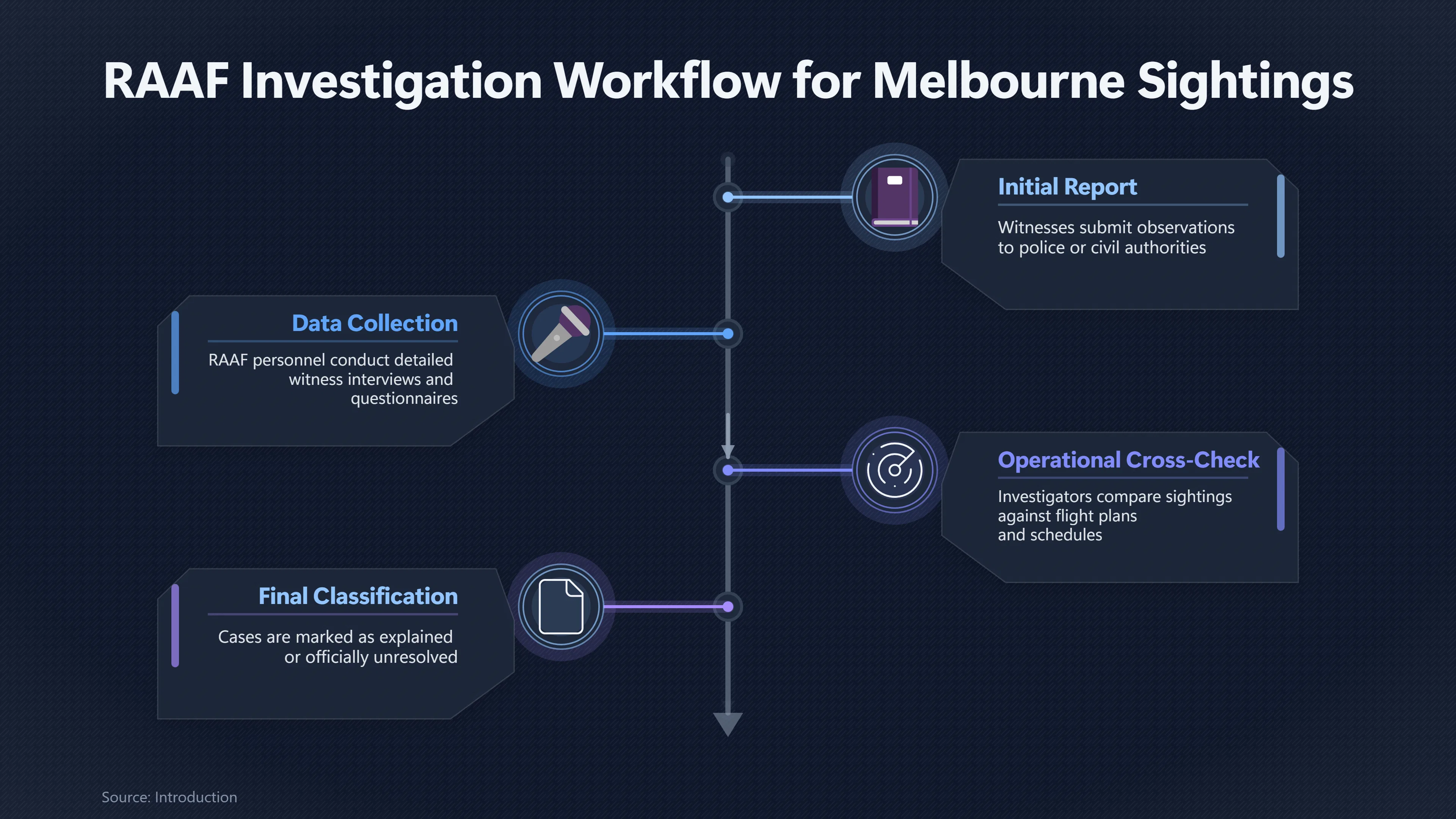
Official procedures were relatively standardised. Reports received by the RAAF directly, or passed on through police or the Department of Civil Aviation, were followed by a questionnaire seeking detailed information about the sighting. Witnesses were commonly interviewed by RAAF personnel, particularly where the report appeared credible or involved aviation. Pilots were expected to report unusual aerial observations through air traffic control, allowing civil aviation authorities and the RAAF to compare independent records.[Internet Archive]archive.orgOpen source on archive.org.
Around Melbourne this process was especially important because the city’s airspace contained:
- scheduled airline traffic approaching and departing Essendon, and later Tullamarine;
- military training flights from Point Cook and Laverton;
- light aircraft operating from Moorabbin and smaller aerodromes;
- regular navigation and instrument-training exercises.
Any unusual light therefore had to be considered against a busy operational picture before investigators treated it as genuinely unidentified.
Aircraft, balloon and astronomical checks around Melbourne
The RAAF’s first objective was elimination rather than speculation. Investigators worked through the most likely explanations before considering whether a report should remain unidentified.
Typical checks included:
- Aircraft movements. Flight plans, military exercises, airline schedules and local flying activity were compared with the reported time, direction and altitude. A witness unfamiliar with aviation lighting might mistake landing lights, navigation lights or aircraft seen head-on for an unusual object.
- Weather balloons and atmospheric balloons. Balloon launches could produce unfamiliar appearances, particularly when illuminated by the rising or setting sun. During the Cold War, high-altitude balloons also had meteorological and research uses, making them a routine line of inquiry.[Internet Archive]archive.orgOpen source on archive.org.
- Astronomical objects. Bright planets such as Venus, prominent stars and meteor activity were checked because these frequently generated reports of apparently stationary or slowly moving lights. Atmospheric conditions near the horizon could make celestial objects appear unusually bright or seem to change colour.
- Weather conditions. Cloud layers, haze, temperature inversions and reflections could alter the appearance of ordinary lights or reduce a witness’s ability to judge distance and speed.
Investigators also looked for consistency between multiple witnesses. Independent observations from different locations or from pilots and controllers carried more evidential weight than a single brief sighting, but even multiple reports did not automatically prove that an unknown craft had been present.
Why incomplete observations often remained unresolved
One of the most misunderstood features of RAAF UFO files is that an unresolved case was not considered proof of something extraordinary.
Many reports around Melbourne consisted of only a few seconds of observation. Witnesses often could not estimate altitude, speed, distance or direction accurately, particularly when viewing isolated lights against a dark sky. Without photographs, radar confirmation or multiple well-correlated observations, investigators frequently lacked enough information to identify the object with confidence.
Official guidance acknowledged this limitation. The RAAF investigated reports from the standpoint of Australian airspace security, but did not conduct open-ended scientific investigations into every unexplained sighting. Internal summaries noted that while the overwhelming majority of reports could be explained, a small proportion remained unresolved simply because the evidence was insufficient rather than because investigators believed they represented unknown technology.[Internet Archive]archive.orgOpen source on archive.org.
This distinction is important when reading archived files. “Unidentified” often meant “not enough reliable information”, not “identified as alien”.
Why Melbourne’s airfields required careful scrutiny
Melbourne’s concentration of aviation activity made it one of the more challenging environments in Victoria for assessing unusual aerial reports.
Unlike sightings from remote locations, observations near the city’s airports had to be interpreted against:
- intersecting civil and military flight paths;
- changing aircraft lighting during approach and departure;
- increasing jet traffic through the 1950s and 1960s;
- growing radar and air traffic control networks;
- frequent night operations and pilot training.
This complexity meant that investigators rarely relied on a witness account alone. Instead, they compared independent operational records wherever possible, seeking corroboration before deciding whether an explanation was available.
The approach reflected Cold War priorities. An unidentified object near important airfields could represent a reporting error, but it also had to be checked in case it involved an aircraft, balloon or another object relevant to Australian airspace security.[Internet Archive]archive.orgOpen source on archive.org.
What these investigations tell us today
The surviving RAAF files show a methodical process rather than a search for evidence of extraterrestrial visitors. Reports around Melbourne’s airfields were filtered through aviation records, weather information, astronomical checks and witness interviews before reaching a conclusion.
For historians of Victoria’s UFO history, this investigative process is often more revealing than the individual sightings themselves. It demonstrates how Cold War defence authorities balanced public reports with operational evidence, explains why many cases were resolved through conventional explanations, and clarifies why a small number remained officially unidentified without implying that investigators had confirmed anything extraordinary.
Amazon book picks
Further Reading
Books and field guides related to How Melbourne's Strange Lights Were Checked. Use these as the next step if you want deeper reading beyond the article.
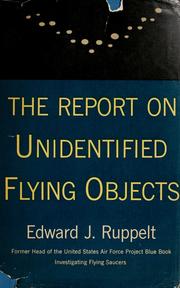
The Report on Unidentified Flying Objects
Book Excerpt: ing can never be positively identified. It might have been a hallucination or it might have been some vehicle from outer sp...

The UFO Experience: A Scientific Inquiry
Cited by the New York Review of Books as "the best brief for visitation," this classic study presents an analysis of UFO reports and conc...
UFOs and Government: A Historical Inquiry
Governments around the world have had to deal with the UFO phenomenon for a good part of a century. How and why they did so is the subjec...
eBay marketplace picks
Marketplace Samples
Live-tested eBay searches with available results related to this page.
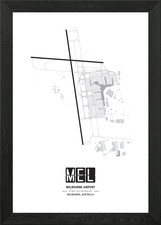
Selected fromMelbourne airport poster oneBay.co.uk.
Endnotes
1.
Source: archive.org
Link:https://archive.org/stream/AustralianUFOFiles/A703_554-1-30_Part%202_12055824_djvu.txt
Additional References
2.
Source: upload.wikimedia.org
Title: Investigations of flying saucers in Australia, A703, 554 1 30, part 3
Link:https://upload.wikimedia.org/wikipedia/commons/a/a8/Investigations_of_flying_saucers_in_Australia%2C_A703%2C_554-1-30%2C_part_3.pdf
Source snippet
5~4UFO INVESTIGATION IN THE RAAF. Research into this subject has come up with some un- rewarding answers, firstly the inquiry can not go...
3.
Source: facebook.com
Link:https://www.facebook.com/ausgeo/posts/have-aliens-visited-australia-in-honour-of-world-ufo-day-july-2-tim-the-yowie-ma/1154389716726014/
Source snippet
wie Man delves into the [Westall]({{ 'westall/' | relative_url }}) UFO incident that occurred...
4.
Source: abc.net.au
Title: accessing australia secret ufo files
Link:https://www.abc.net.au/news/2024-12-07/accessing-australia-secret-ufo-files/104673082
Source snippet
Up until the 1990s, the Royal Australian Air Force (RAAF) was responsible for investigating UFOs — then called Unusual...Read more...
5.
Source: naa.gov.au
Title: flying saucers fact or fiction
Link:https://www.naa.gov.au/blog/flying-saucers-fact-or-fiction
Source snippet
Flying saucers – fact or fiction?28 Feb 2018 — The disappearance of an aircraft while the pilot was reporting a UFO created a media sensa...
6.
Source: navyhistory.au
Title: UFO sightings became common during the Cold War.Read more
Link:https://navyhistory.au/podcast/the-raaf-and-the-ufos-some-of-the-story/
Source snippet
The RAAF and the UFO's: some of the story11 Jul 2021 — Wing Commander Paget discussed the RAAF's investigation of Unidentified Flying Obj...
7.
Source: instagram.com
Link:https://www.instagram.com/reel/DDdfzgMNjYr/?hl=en
Source snippet
CropCircle #UFOSighting #HowToMakeACropCircle...
8.
Source: youtube.com
Link:https://www.youtube.com/shorts/Rrou1Yl-hao
Source snippet
ivilian wanted to get eyes on those files to see what was in them...
9.
Source: Wikipedia
Title: Australian ufology
Link:https://en.wikipedia.org/wiki/Australian_ufology
Source snippet
Australian ufology... RAAF was investigating the UFO phenomenon. The then Minister for Air, William McMahon (later Prime Minister) rep...
10.
Source: youtube.com
Title: UFOs or Pilot Error? The Disappearance of Frederick [Valentich]({{ ‘valentich/’ | relative_url }})
Link:https://www.youtube.com/watch?v=6LNnWxi_lw4
Source snippet
The Unsolved Mystery of Melbourne's UFO Encounter...
11.
Source: youtube.com
Title: The Unsolved Mystery of Melbourne’s UFO Encounter
Link:https://www.youtube.com/watch?v=iNTaTkdgN8Q
Source snippet
Archived: Australia's UFO Files | Official Trailer...